The Last Train Back
The surest way to relax in a far city is to know exactly when you must leave it. Nell builds a long June day backward from the final departure and waits on a platform at dusk.
Every good day away contains one number, and the number is the time of the last train home. Learn it before you learn anything else about the place you are visiting. The rest of the day can wander wherever it likes, because the frame around it holds.
I tested this rule in Boston on the longest Wednesday of June, with Providence waiting at the far end. The final southbound departure left at a quarter past nine, a fact I wrote in ink on my wrist. Everything I did that day, from the first market stall to the last public bench, leaned on that appointment.
This essay is about that arithmetic, and about the platform where it finally pays out. A commuter railroad runs the hour between the two cities many times a day, until suddenly it does not. The difference between a calm evening and a scramble is knowing exactly where the timetable ends.
The arithmetic of leaving
My whole method is plain enough to fit on the back of a ticket stub. Find the last departure, subtract half an hour, and treat that earlier time as the true one. The buffer absorbs a slow check, a long platform, a wrong staircase, and one final view you refuse to skip. Trains do not practice forgiveness, and the schedule feels no obligation to your dessert.
Then build the day backward from that anchor, the way you would pack a suitcase from the bottom. Supper goes nearest the station, ideally within a ten minute walk of the doors. The afternoon holds the far flung errands, while energy is high and the map is still interesting. The morning stays loose, spent on whatever opens early, which in Boston means markets and water.
I keep the printed timetable from the station rack folded in my back pocket all day. Phones are fine until they are not, and paper has never once shown me a spinning wheel. The rack by the information booth restocks most mornings, and the sheet folds to the size of a postcard.
Why the last and not the next to last
There is a case for aiming at the next to last train and holding the final one in reserve. I tried that system for a year and found that it quietly spends the reserve every single time. Knowing one more train exists, you dawdle into it, and then you ride home tense instead of tired. Aim at the true last train with a firm buffer, and the evening keeps its shape.
The reserve system also fails at the exact moment you need it, on holiday schedules. Twice I have stood confident on a platform while the timetable observed a holiday I had missed entirely. Now I read the footnotes, the way sailors read the small print on a chart.
A day built backward
Here is how the Wednesday actually went, told in the order I planned it, which is reverse. Supper was chowder at a counter three blocks from the station, ordered at seven with time to spare. Before that came a long amble down the harborwalk, where the June light stretched like taffy. Before that, an hour among the used bookstores near the hill, where I bought one small atlas.
The early afternoon belonged to the far side of the Common, the greenhouse beds, and a slow swan count. The morning had opened at the public market, with peaches that had no business being ready in June. Read backward it looks like bookkeeping, and lived forward it felt like luck. That is the backward method working exactly the way it is supposed to work.
By half past eight I was inside the station, watching the departure board shuffle its letters. The last train gathered its passengers gently: night staff, kitchen crews, students with laundry, one man asleep upright. When the track number finally posted, the whole room moved together, unhurried and certain.
The platform at dusk
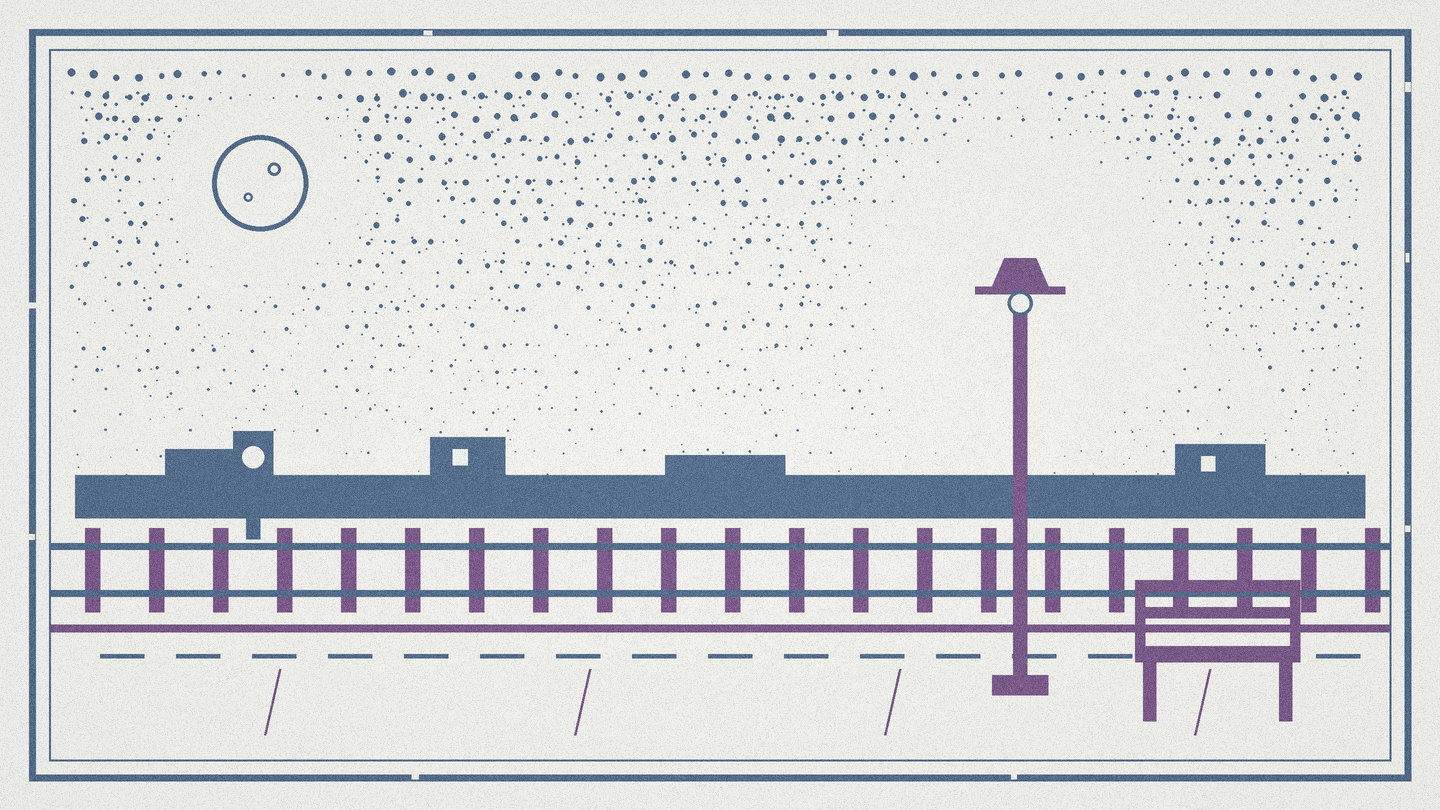
An open platform at dusk in late June is its own small destination. The heat of the day let go, and the rails picked up the last silver of the sky. Swifts worked the air over the wires, stitching up the evening at high speed. Down the platform the lamps came on one by one, each with a private halo of moths.
Waiting has a bad reputation, and ten minutes here argued against it. A conductor walked the length of the train with a lantern gait, checking doors with two fingers. Somewhere behind me a cello case thumped softly against a bench, and nobody minded at all. The board clicked, the air brakes sighed, and the whole scene tipped from waiting into leaving.
I took a window on the right side, which faces west across the marshes on the ride south. If you have the choice, sit there in summer and watch the afterglow do its slow work.
The ride home in the half dark
The train pulled out through the yards while the city rearranged itself into silhouettes. Backyards, ballfields, and salt marsh took turns at the window, each a shade darker than the last. At the small stops the platform lamps stood in pairs, lighting nobody, faithful anyway. I find that image absurdly comforting, like porch lights left on for grown children.
The ride to Providence runs about an hour with the local stops, and the hour has a shape. First comes review, then a nap you deny having taken, then the pull of your own station. The conductor called the names like a poem she had recited for twenty years, because she probably had. When the towers of downtown finally slid into the glass, I felt the day click shut, satisfied.
We rolled in four minutes late, which the timetable and I had already agreed to forgive. The platform at home smelled of rain that had missed me entirely. A last train delivers you with a particular tenderness that the six fifteen simply does not have.
Worth the walk
Building a day around the last train suits travelers who relax inside a frame, not against one. If a fixed hour would sit on your chest all afternoon, take an earlier train and a looser evening. Check the timetable on the day you travel, since evening schedules thin out and holidays rewrite them. Give yourself the half hour buffer without negotiation, and let the buffer buy your calm.
Mind the practical side as well, because late evening travel changes how stations behave. Some smaller platforms reach the street only by stairs, and elevators keep shorter hours than trains do. If you wheel anything, confirm the step free route before you commit to the late departure. Then go spend a long day somewhere else, and let the last train carry you home half asleep.
Mile notes
- Evening and holiday timetables sit printed in the station racks and mirrored on the railroad's public schedule pages.
- Elevator status and step free access notes for each station appear on the same public pages.
- Public market hours and garden times are listed on the City of Boston visitor pages.

Nell Harrow, founder and editor. Walks out of Providence, writes on the way back.