Morning at the Depot
Ninety winter minutes at a two room depot: coffee poured from a thermos, a schedule board worth reading slowly, and the first train of the day.
A junction essay is a walk that stays put, and this one stays put at a small wooden depot. The building has two rooms and a platform on the shoreline branch south of Providence, painted the white of old envelopes. I went in the first week of February to watch the first train arrive and leave.
I will not name the railroad here, because the railroad does not need my help, and the morning belongs to the building. What I will name is the hour, five forty, with the sky still shut like a drawer. The thermos was full, the gloves were the good pair, and the platform lamps hummed one long note.
Nine people shared that platform with me across ninety minutes, and not one of them raised a voice. Depots teach a particular quiet, the quiet of people saving themselves for the day ahead. It is my favorite kind of public silence, and February pours it undiluted.
The hour before
The waiting room unlocks with the first shift, but the platform belongs to anyone with a reason or without one. Frost had grouted every plank, and my boots printed a slow record of circles around the lamp post. The cold took attendance honestly: two walkers, one bicycle, a parka zipped over a suit.
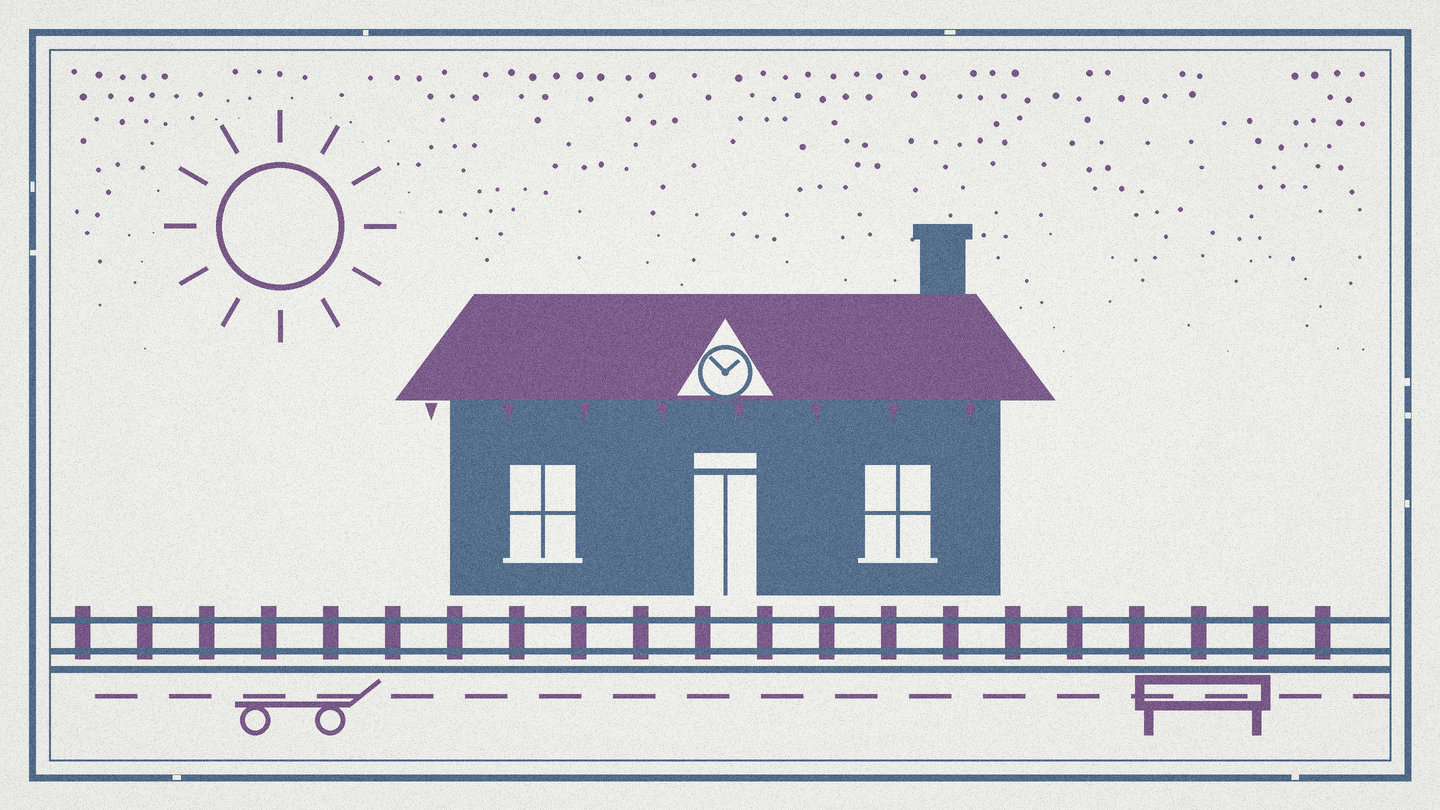
The depot itself kept its own counsel, shingled and shuttered, with one lamp over the door doing all the talking. Paint peels in the sheltered corners the way it does on working buildings, honestly and without apology. Somewhere behind the building a heat pump cycled on, the only modern voice in the scene.
At five fifty a pickup idled in, parked on its own diagonal, and produced a man with a canvas tool bag. He nodded once, set the bag between his feet, and became a statue that breathed steam. I poured the first cup, and the cup's steam introduced us better than talk would have.
Coffee from a thermos tastes of the container and of the hour, and both improve it. I drink it in small ceremonial sips, because the supply has to last until the second train. A depot morning without a thermos is a lecture hall without a single chair.
Reading the board
The schedule board hangs behind glass beside the door, printed in columns and corrected in two places by hand. Inbound on the left, outbound on the right, weekend times boxed along the bottom like a postscript. Someone has underlined the six oh four in pencil, twice, with feeling.
A timetable is the most hopeful literature a town publishes, and this one runs to four tidy columns. It claims that the day will proceed in order, and the day mostly agrees to the terms. I copied the day's brackets into my notebook, six oh four at the front and eleven fifteen at the back.
The board also keeps the depot's small archive pinned around its edges. There is a faded notice about a platform repair finished years ago, and a thumbtacked card about a lost green scarf. The scarf card carries a phone number written in careful loops, and I hope that number rang.
The first train
You hear a train in the rails before any horn confirms it, a thin ringing like a struck shelf. At six oh two the crossing bell two streets north began its argument with the dark. The platform reassembled itself out of statues, and everyone drifted to a private mark on the boards.
The headlight swung in tall and sudden, and the cars slid past at a walking pace before stopping. Doors opened on warm yellow light, and the nine of us became eight passengers and one witness. The man with the tool bag boarded last, unhurried, a professional at exactly this.
Ninety seconds is the whole transaction, and then the horn spoke once and the train pulled its light away. What stays with you is the sound leaving, a long subtraction that takes a full minute to finish. Then the crossing bell gave up, and the ordinary noises returned, a crow, a plow blade somewhere, the flag rope ticking.
The waiting room
At six thirty a clerk unlocked the waiting room, put the lights on, and propped the door open despite the cold. I chose to read the propped door as hospitality, and I stepped inside with my cup. There were two long benches worn to a shine, a radiator with opinions, and a wall clock running two minutes proud.
A framed photograph hangs beside the shuttered ticket window, and it rewards a long look. It shows this same platform a century ago, baggage wagons and a stationmaster mid stride, every figure blurred except the building. Buildings learn to hold still for cameras, and the rest of us smear into motion.
The town historical society dates the depot to the eighteen seventies, and the roof brackets agree. It has been a flag stop, a freight office, and for one winter a parcel room. Small buildings survive by agreeing to whatever the century asks of them next.
The second act
By seven the lot had filled to a respectable eleven cars, and the platform grew its second crowd. This group stood looser and talked more, the six fifty two carrying easier obligations than the six oh four. A kid in a hockey jacket rehearsed something under his breath, timing himself against the board.
The second train ran two minutes down, and the platform absorbed the delay without visible damage. When it left, the clerk salted the ramp by the door, evenly, like a baker finishing something. I gave up my seat, walked the platform's length one last time, and made it ninety two paces.
The walk back to the corner where the early bus stops takes six minutes at a February pace. I finished the thermos standing at the curb, which is the correct place to finish a thermos. The depot lamp went dark behind me at seven thirty, on a timer, done with the night.
Worth the walk
A depot morning suits early risers, timetable readers, and anyone who likes a town before the town is awake. It involves standing still in serious cold, so dress heavily and bring the thermos without debate. The platform is level and step free from the lot, though the old footbridge stairs ice over and are easy to skip.
If waiting makes you restless, this hour will feel like two hours, and I say so plainly. If waiting is a skill you want back, the six oh four is a patient teacher with a clean record. No ticket is required for the lesson, and the seat by the door is usually free.
Mile notes
- Train times checked against the printed schedule sheet posted at the depot door
- Building dates and past uses from the town historical society's walking leaflet
- Platform and parking details noted on site during the first week of February

Nell Harrow, founder and editor. Walks out of Providence, writes on the way back.
Connecting routes
- JunctionsThe Long Way Over the River Bridge
- JunctionsThe Last Train Back
- CircuitsOut to the Harbor Light and Home Again