Fox Point and the Wall That Waits
From a Wickenden Street bus stop through the clapboard lanes of Fox Point, out to the harbor park and the great gates that stand ready for weather.
Providence keeps a wall against the sea, and hardly anyone walks out to meet it. The hurricane barrier stands at the river mouth, three steel gates hung between concrete shoulders. On a windy Wednesday in late March I went to pay my respects on foot.
The route starts from a bus stop on Wickenden Street and runs about two and nine tenths miles. It crosses Fox Point, the old dockworkers' neighborhood, then follows the harbor line west to the gates. My round trip took sixty five minutes, with generous stops for boats and weather. The ground stays level except one gentle rise back up to Wickenden.
Dress for wind even when the forecast shrugs, because the river mouth makes its own. March gusts off the bay carried salt, diesel, and the occasional opinion. I wore a wool cap and was glad of it by the second pier.
Off the bus on Wickenden
The stop sits mid block among storefronts, where Wickenden Street does its casual business. Step down, walk east past the framing shop and the violin repair window, and breathe in. Somebody is always toasting something on this street, and the wind files a report. At Brook Street, turn right and let the neighborhood quiet down around you.
Two blocks south, Transit Street crosses your path, and I refuse to skip it. A street named Transit belongs in this gazette the way bread belongs in a kitchen. Its clapboard houses stand close and bright: mustard, teal, brick red, and one confident violet. Window boxes were already trying crocuses, three weeks ahead of good sense.
Sheldon and Arnold run parallel a block on, each with its own museum of doorways. Several houses wear plaques from the 1820s, when ship carpenters built tight and square. Gaps between them frame the harbor cranes like postcards mailed from two eras. I budget five extra minutes for this grid every time, and spend ten.
Fox Point made its living from the docks for most of two centuries. Longshore families filled these small houses, and the corner stores kept their hours. The harbor work moved on, but the grid still points every street at the water. Walk downhill in any direction here and you will eventually smell salt.
India Point and the harbor line
Sheldon Street delivers you to the footbridge, a bowed span that vaults the highway. Traffic rushes along underneath like a river with somewhere corporate to be. On the far side, India Point Park opens green and generous toward the water. The wind arrived here first and had clearly been rearranging things all morning.
This is where the harbor geometry begins, and I mean geometry as a compliment. Across the water, white fuel tanks sit in rows like button candy. A crane leaned over a scrap pier, feeding a barge with magnetic patience. Two tugs idled at their moorings, bows out, ready the way firefighters are ready.
The park corner also anchors the East Bay path, which this gazette walked in another issue. A signpost gives mileages to towns down the shoreline, all reachable on the same feet. I filed that away for a milder month and turned my collar up instead. March has a way of making you an honest editor of your own ambitions.
Follow the waterside path west with the park on your right shoulder. The path rides the old wharf line, and bollards surface in the grass like iron mushrooms. Gulls held committee meetings on every third piling and adjourned as I passed. Across the river mouth, the barrier's gray shoulders came into view, patient as furniture.
Sounds carry differently over water, and the harbor keeps a low orchestra going. Halyards ticked against masts in the small boat basin, all percussion, no melody. A freighter somewhere south sounded one long note, and the gulls considered it. Under everything ran the highway's steady breath, easy to forget until you listen.
The wall that waits
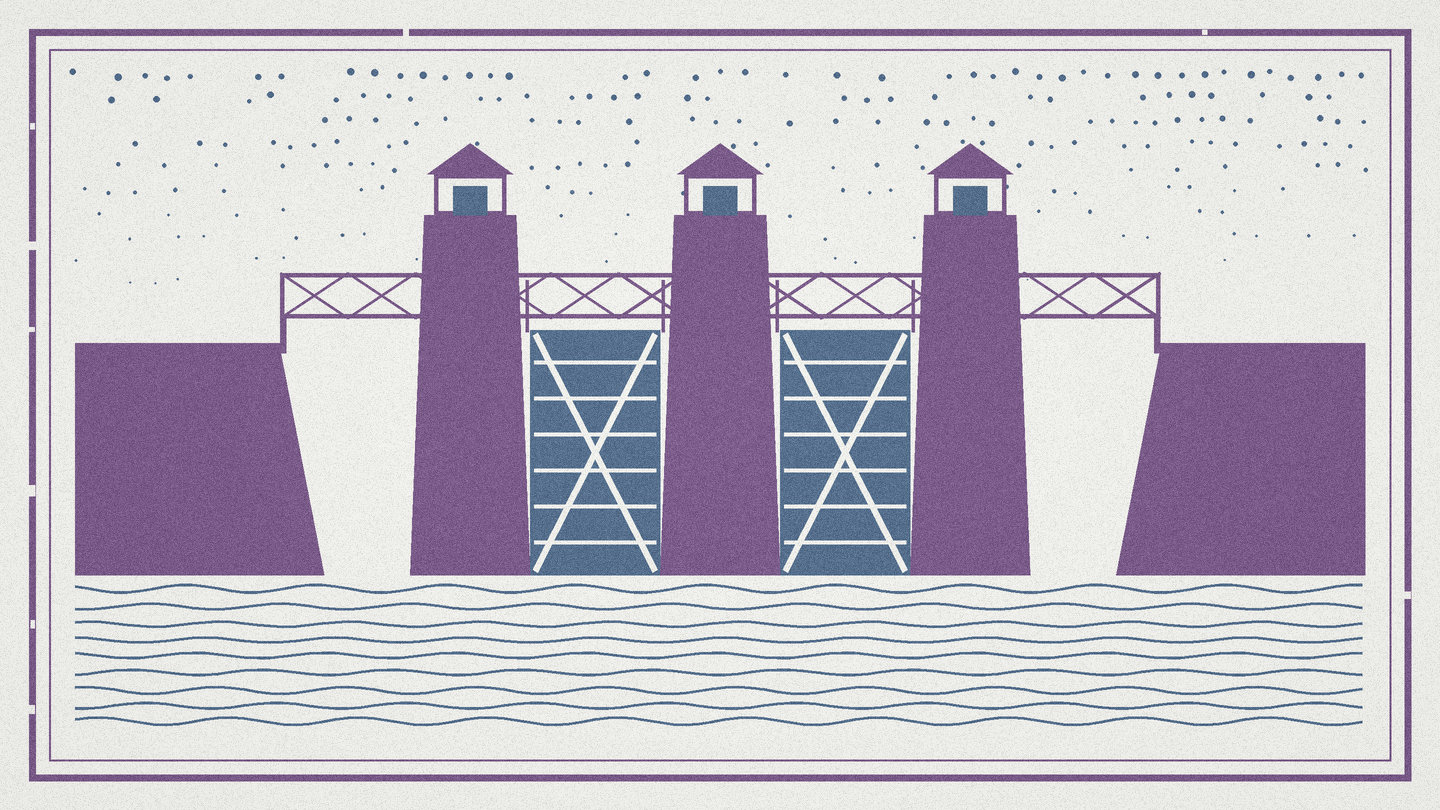
The barrier crosses the river mouth in three plain movements: gate, gate, gate. Each steel leaf stands about forty feet wide, hoisted open between concrete towers. Earthen wings run inland from both banks, quietly continuing the wall through parking lots. A pump house waits at the western end, shaped like a school gymnasium with ambitions.
The city built all this in the 1960s, after two storms in living memory put downtown under water. Ever since, the gates have hung open, letting tides and tugs pass beneath. They close only when the bay rises with serious intent, a few hours in a bad year. Standing under them, you feel the particular calm of a thing built for later.
The wind at the gates deserves its own paragraph, so here it is. It funnels between the towers and arrives edited, colder and more direct. My notebook pages turned themselves over faster than I could fill them. A man walking a terrier passed me, and both wore the expression of experienced sailors.
A weathered plaque on the eastern tower states the essentials without adjectives. I copied the numbers into my notebook while the wind edited my handwriting. High water that day was due at two eleven, a modest four footer. The gates ignored it, as they have ignored every ordinary tide for sixty years.
Back along the water
For the return, retrace the harbor path east and recross the footbridge at Sheldon. Then let Ives Street carry you north through the middle of the grid. The houses tell time differently on the way back, afternoon light picking new favorites. Ives climbs the route's one real rise, gentle enough to finish a conversation on.
Ives meets Wickenden two blocks east of where you started, which closes the loop. I reached the stop at the sixty five minute mark, wind still in my ears. The bus back downtown appeared in six minutes, unbothered by any of it. Salt stayed on my lips through supper, which I counted as a souvenir.
Worth the walk
This route offers the rare pairing of a soft neighborhood and hard infrastructure. You get painted clapboard, then steel gates, inside a single easy hour. Nothing on the walk asks for stamina, only for a jacket that means it.
The footbridge involves stairs on its park side, which rules out wheels and strollers there. Wheeled travelers can enter the park instead by the gate at the foot of Gano Street. Small children and hats need supervision near the water's edge, since railings come and go. On raw days the wind at the gates can turn a stroll into a negotiation. There is no shame in saving the barrier for a kinder afternoon.
But go at least once while the gates hang open and the tugs sit ready. A city shows you its character in the things it builds for someday. Providence built patience out of steel and concrete, then painted nothing on it. The walk out and back is how a pedestrian says thank you.
Mile notes
- Barrier history and gate operation notes from the state coastal program's public pages
- Park hours and pathway details from the city parks pages for India Point, March 2026
- Tide heights checked against the federal charting office tables for the upper bay

Nell Harrow, founder and editor. Walks out of Providence, writes on the way back.